

Research aims to solve sticky situation, preserve millions in trade
A move by European nations, led by France, mandating that PLU (price look up) stickers on fresh fruits and vegetables be home compostable has major implications for U.S. exports.
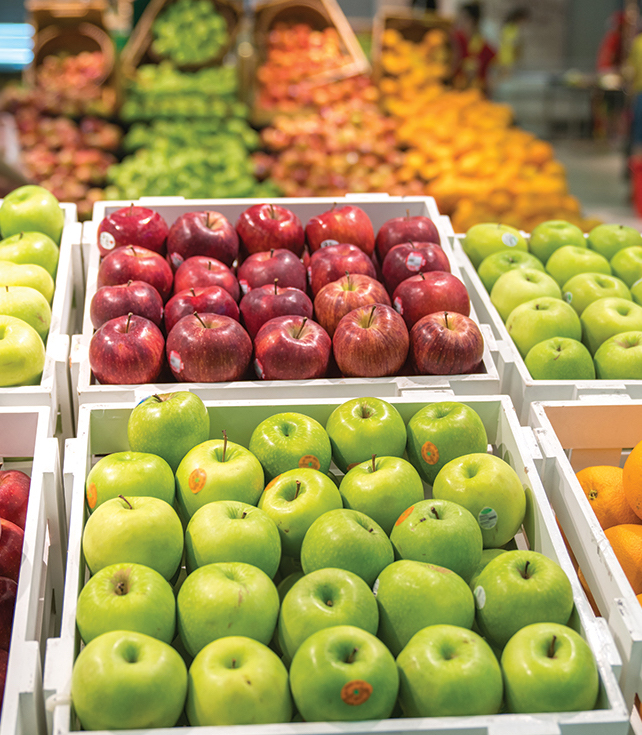
A move by European nations, led by France, mandating that PLU (price look up) stickers on fresh fruits and vegetables be home compostable has major implications for U.S. exports. While the paper used to make the stickers in America is biodegradable, the adhesive is not.
 “We kind of started out brainstorming as a big group — what are certain things that we could try and use?” McManus said. “We tried to look at things based on some of the work we’ve done on bioplastics. We started with those ingredients, then just made lots of formulations.”
Millions of dollars in international trade are at stake. Of the $12.54 billion in fruits and vegetables exported by the U.S. in 2022, $358.6 million went to the European Union, according to the USDA’s Foreign Agricultural Service (FAS).
Many plant-based adhesives include oils, fatty acids, proteins, starches, rosins, natural latex and rubber. For use on PLU stickers, the adhesive must be food-grade and generally recognized as safe. McManus and his research team aim to increase the bonding strength of such natural adhesives so that PLUs will remain affixed to fruit during export, display and other handling.
The lab continually tests and modifies, adding different ingredients and ratios to formulate various adhesives.
“We put it down on backing, transfer it over to the film which the label is going to be made out of, and then see how well that sticks to some of our test protocols and to fruit as well,” McManus said.
A research grant proposal focused on grapefruit and sweet potatoes, citing FAS reports as well as data from international retailers such as Walmart and Carrefour that the loss of those exports to Europe could cause the most economic harm. But those parameters have expanded, McManus said.
“(The adhesive) needs to work on everything from kiwis that have kind of a rough surface to peaches that have fuzz on them to easier things like apples and bananas that are pretty flat and even to work with,” he said. “So we test across a wide variety, and it’s designed to work on as many things as possible. I won’t say that we have tested every single fruit out there, but we do try it on different types of fruit.”
“We kind of started out brainstorming as a big group — what are certain things that we could try and use?” McManus said. “We tried to look at things based on some of the work we’ve done on bioplastics. We started with those ingredients, then just made lots of formulations.”
Millions of dollars in international trade are at stake. Of the $12.54 billion in fruits and vegetables exported by the U.S. in 2022, $358.6 million went to the European Union, according to the USDA’s Foreign Agricultural Service (FAS).
Many plant-based adhesives include oils, fatty acids, proteins, starches, rosins, natural latex and rubber. For use on PLU stickers, the adhesive must be food-grade and generally recognized as safe. McManus and his research team aim to increase the bonding strength of such natural adhesives so that PLUs will remain affixed to fruit during export, display and other handling.
The lab continually tests and modifies, adding different ingredients and ratios to formulate various adhesives.
“We put it down on backing, transfer it over to the film which the label is going to be made out of, and then see how well that sticks to some of our test protocols and to fruit as well,” McManus said.
A research grant proposal focused on grapefruit and sweet potatoes, citing FAS reports as well as data from international retailers such as Walmart and Carrefour that the loss of those exports to Europe could cause the most economic harm. But those parameters have expanded, McManus said.
“(The adhesive) needs to work on everything from kiwis that have kind of a rough surface to peaches that have fuzz on them to easier things like apples and bananas that are pretty flat and even to work with,” he said. “So we test across a wide variety, and it’s designed to work on as many things as possible. I won’t say that we have tested every single fruit out there, but we do try it on different types of fruit.”
Solving a sticky situation
James McManus is leading the charge to find a solution. McManus is a USDA research chemist working with the agency’s Bioproducts Research Unit at the Western Regional Research Center in Albany, California. In collaboration with organizations including produce labeling company Sinclair and the International Fresh Produce Association, researchers have been working for about two years to find a home-compostable and food-safe adhesive.McManus