

Processor bringing frozen sustainability into focus
Find out how German processor Westhof Bio is using sun, wind and a high-temperature thermal storage system to power sustainability.
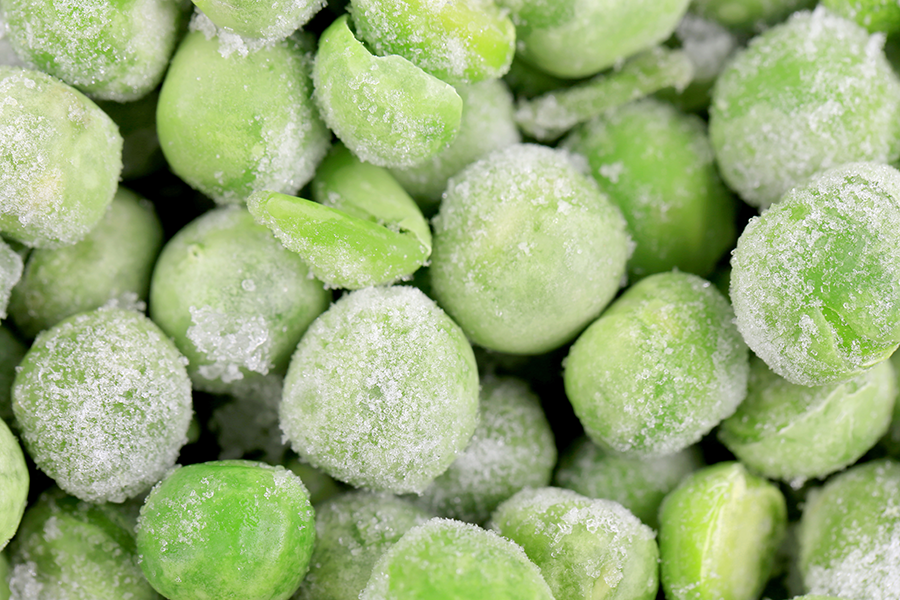
In a windowless room held steady at minus 11° F, frozen broccoli, cauliflower and carrot-pea mixes sit in bulk containers, stacked floor to ceiling. A fully automated system knows exactly where each item is stored. Overnight, it selects and queues the day’s orders so workers can pack them for shipping at first light.
What makes this state-of-the-art processing plant in northern Germany exceptional isn’t just automation. It’s what powers it.
Westhof Bio’s frozen food plant draws its energy from sun, wind and an innovative high-temperature thermal storage system that stores heat like a battery. Water that’s used to wash vegetables is filtered and reused to irrigate the same fields the vegetables come from. Waste from sorting and trimming fuels a biogas plant that heats the company’s greenhouses and supplies CO2 to enrich the air around tomato plants.
“We’re trying to close every loop we can,” said Rainer Carstens, Westhof Bio’s founder. “That’s the only way to build a system that’s truly sustainable — ecologically and economically.”
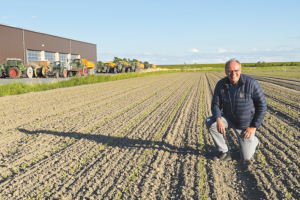
Rainer Carstens, founder of Westhof Bio, in a young vegetable field at the company’s farm in Schleswig- Holstein, Germany. Carstens began farming organically in 1989 and has since built a vertically integrated operation that now includes vegetable production, greenhouses and a frozen food plant. Photos courtesy of Westhof Bio.
FROM SINGLE FARM TO CIRCULAR SYSTEM
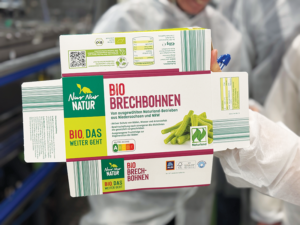
Westhof Bio began in 1989 with a 150-hectare (371-acre) organic farm in Schleswig-Holstein in northern Germany. Today, the operation covers more than 1,000 hectares (2,400 acres) and includes vegetable production, herb drying, greenhouse tomatoes, a large-scale packing station and the recently completed frozen foods plant. At the center of the operation is the farm itself, which supplies carrots, broccoli, cauliflower, celeriac, potatoes and leafy greens to the processing arm. Some crops, such as tomatoes and herbs, are grown under glass. Others, such as spinach and corn, come from contracted organic growers in the region. “We are only buying organic,” said Carstens, emphasizing the company doesn’t separate or mix conventional and organic produce at any point in the value chain. The frozen vegetable plant is powered by a hybrid system that combines solar panels, a wind turbine and a high- temperature salt storage unit. The storage system heats a mineral salt medium to 752° F, which can then be used to generate process heat — even at night or on windless days. “This is really a new idea,” said Carstens, noting the project was developed with a local engineering partner. “We have this salt, and we are heating it up and getting steam out of it.” Water used in vegetable processing is filtered and reused for irrigation. Vegetable scraps, culled produce and sorting waste are fed into a biogas plant that also digests other organic waste from partner farms. The resulting biogas provides heat for tomato production and contributes CO2 to enhance greenhouse yields. Even the packaging loop is closing, with Westhof Bio preparing to transition from mixed-material plastic bags to fully recyclable mono-material pouches.A worker holds packaging for Westhof Bio’s frozen organic green beans, sold under the “Nur Nur Natur” label with Naturland certification.